

Protein and Its Role in Muscle Growth
What Is Protein?
Think of protein for muscle growth as the constructing blocks of your frame. Every muscle fiber, enzyme, hormone, and tissue is predicated on protein to function properly. Protein is made up of amino acids, small compounds that act like bricks used to rebuild and support muscle tissues after exercising.
Without enough protein, your body cannot, without a doubt, restore damaged muscle mass. And no repair method, no boom.

Why Protein Is Essential for Muscle Building
When you lift weights or perform resistance training, your muscles experience microscopic tears. Sounds scary? Actually, that’s exactly what you want.
Protein enables the repair of those tears, making muscle groups stronger and larger over time. This technique is called muscle protein synthesis—the actual mystery behind muscle benefits.
How Muscle Growth Actually Happens
Muscle Breakdown vs Muscle Repair
Muscle increase occurs while muscle protein synthesis exceeds muscle breakdown. Training breaks down muscle fibers, while nutrition—particularly protein—rebuilds them.
Imagine renovating a house:
- Workout = demolition
- Protein = production material
- Rest = rebuilding segment
Miss one step, and progress slows dramatically.
Role of Resistance Training
Protein on its own won’t build muscle whilst sitting on the couch. Resistance education sends the signal telling your body:
“We need more potent muscle groups.”
Proteins provide the raw materials to respond to that signal.
Recommended Daily Protein Intake
Protein Needs for Sedentary Individuals
The primary recommendation for inactive adults is:
0.8 grams of protein for every kilogram of body weight
But this stage is most effective at preventing deficiency—it’s no longer sufficient for muscle growth.
Protein Needs for Active Individuals
If you exercise regularly, protein demands increase:
1.2–1.6 g per kg of frame weight
This helps restoration and performance.
Protein Intake for Muscle Growth
For the premier muscle boom, research constantly suggests:
✅ 1.6–2.2 grams of protein consistent with a kilogram of body weight
This range maximizes muscle-building potential without unnecessary extras.
Protein Intake Based on Body Weight
Protein Per Kg Calculation
Here’s the simple system:
Body Weight (kg) × 1.6–2.2 = Daily Protein Requirement
Simple Protein Calculation Example
If you weigh 70 kg:
- Minimum muscle gain consumption:
- 70 × 1.6 = 112g protein/day
- Optimal range:
- 70 × 2.0 = 140g protein/day
Easy, proper?
Factors That Affect Protein Requirements
Age
Older adults need slightly higher protein consumption due to reduced muscle-constructing efficiency.
Gender
Men typically require extra protein because of better muscle mass, even though women gain equally from adequate intake.
Training Intensity
Heavy strength training or bodybuilding increases protein turnover, so higher protein intake is useful.
Body Composition Goals
- Bulking → Higher protein + calorie surplus
- Fat loss → Higher protein preserves muscle.
Best Time to Consume Protein
Pre-Workout Protein
Eating protein before schooling provides amino acids for exercising, reducing muscle breakdown.
Post-Workout Protein
The well-known “anabolic window” isn’t just 30 minutes—eating protein within 2 hours of exercise improves recovery.
Protein Distribution Throughout the Day
Instead of 1 large meal, the intention is for:
✅ 20–40g protein per meal
✅ three–5 food day by day
Your muscle tissues develop better with steady delivery.
Best Protein Sources for Muscle Growth
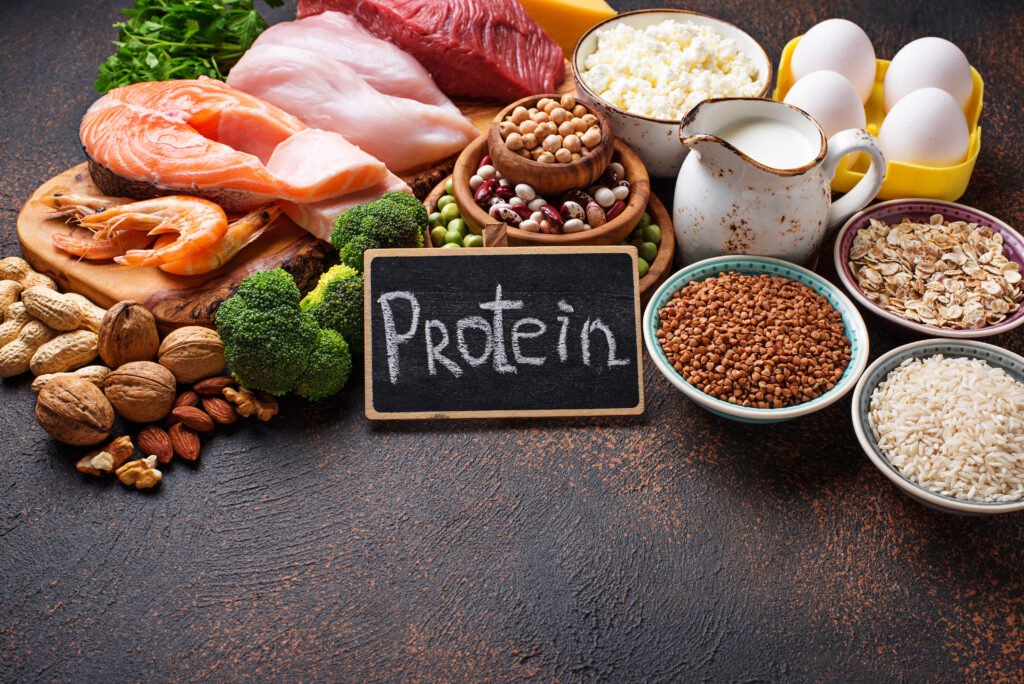
Animal-Based Protein Sources
The highest-quality complete proteins include:
- Eggs
- Chicken breast
- Fish
- Lean red meat
- Greek yogurt
- Milk
These contain all critical amino acids needed for growth.
Plant-Based Protein Sources
Great vegetarian options:
- Lentils
- Chickpeas
- Tofu
- Paneer
- Quinoa
- Soy merchandise
- Nuts and seeds
Combining plant proteins improves amino acid balance.
Whole Foods vs Protein Supplements
Do You Need Protein Powder?
No, dietary supplements are handy, not obligatory.
Whole foods should continually be your foundation.
When Supplements Help
Protein powders are useful while:
- You work to meet daily objectives.
- Busy schedules limit meal prep.
- Post-exercise comfort is wanted.
Common Protein Myths
More Protein Means More Muscle?
Not exactly.
Once protein wishes are met, more consumption doesn’t magically boost muscle growth. Training first-rate and recovery count for more.
Is Too Much Protein Harmful?
Healthy individuals with normal kidney function can consume higher protein levels within the recommended range.
Balance remains key.
Signs You’re Not Eating Enough Protein
Watch for:
- Slow healing
- Muscle loss
- Constant fatigue
- Increased starvation
- Weak workout performance
Your frame often signals dietary gaps in reality.
Sample Daily Protein Meal Plan
Example for ~130 g protein:
- Breakfast: Eggs and oats (30g)
- Lunch: Chicken + rice + veggies (35g)
- Snack: Greek yogurt + nuts (20g)
- Post-exercising shake (25g)
- Dinner: Paneer or fish (25g)
Simple. Practical. Effective.

Mistakes to Avoid When Increasing Protein Intake
Common errors encompass:
- Ignoring calories.
- Eating protein in one meal is simplest.
- Neglecting carbs and fat.
- Poor hydration.
- Over-relying on dietary supplements.
Muscle gain requires stability—not obsession.
Protein and Fat Loss While Gaining Muscle
High protein intake helps:
- Preserve lean muscle
- Increase satiety
- Boost metabolism slightly
That’s why frame recomposition will become feasible.
Hydration and Protein Intake
Higher protein intake will increase water intake.
Aim for:
✅ three to four liters each day (depending on activity)
Water supports digestion and nutrient delivery.
Long-Term Muscle Growth Strategy
Muscle benefit is a marathon, not a sprint.
Focus on:
- Progressive overload
- Consistent protein intake
- Quality sleep
- Recovery days
- Sustainable nutrient behavior
Consistency beats perfection whenever.
Conclusion
So, how much protein do you really want for muscle advantage?
The sweet spot lies between 1.6 and 2.2 grams per kilogram of body weight. Combine this with effective education, proper restoration, and balanced nutrition, and your muscles will respond naturally.
Remember—protein isn’t a magic powder. It’s honestly the fuel your frame needs to rebuild stronger after an attempt. Train tough, eat smart, live steady, and results will comply.
Frequently Asked Questions
1. Can muscle be built without protein supplements?
Yes. Whole foods provide sufficient protein when daily intake targets are achieved.
2. Is 100 g of protein enough for muscle gain?
Adequacy depends on body weight. For individuals weighing roughly 55–65 kg, it may suffice.
3. How much protein per meal is ideal?
Approximately 20–40 grams per meal effectively stimulate muscle protein synthesis.
4. Can excess protein convert into fat?
Yes—when overall calorie intake surpasses energy expenditure.
5. Should beginners increase protein intake?
Absolutely. Early training phases trigger rapid muscular adaptation, making adequate protein especially beneficial.